
Municipal Wastewater Treatment


The two new plants have been designed to meet the projected needs of Adana to 2025.

Located on opposing sides of the city, the capaicty of Adana West and Adana East is expected to rise to more than 400,000m³ by 2015 and 520,000m³ by 2025.

Built by the ASKY Consortium, the construction phase took three years to complete.

Adana West during construction; associated work included the provision of an enhanced wastewater and storm water collection network.

The treatment approach is conventional - screening, primary settlement, trickling filters and activated sludge.

The anaerobic digesters under construction, with an inset of the finished facility; derived biogas makes a significant contribution to the operating energy requirement.


Work to improve the Bay View plant finished in 2007; the city’s wider initiative is scheduled for completion in 2010.

The Toledo skyline: the $450m Toledo Waterways Initiative is a 15-year scheme to upgrade and improve the city’s ageing facilities.

Building the grit facility in June 2006. Work at the plant has doubled its treatment capacity and made a big improvement to its ability to handle wet-weather flows.

One of the new pump stations required; some of the existing facilities were decommissioned and demolished as part of the project.

The new wet-weather facility at the Bay View plant.


Blocked drainage channels, excreta and waste on the ground - the evidence of poor sanitation. Some 80% of all disease in developing countries arises as a direct result of this.

Children at a Mozambique watering point. The country's Millennium Development goal aims to halve the percentage of people without sustainable access to potable water by 2015.

Armando Emílio Guebuza, President of Mozambique. He has been instrumental in driving water and sanitation issues up the political agenda.

Field work on one of the wastewater management training schemes run by Train-Sea-Coast GPA – a UN inter-agency collaboration.

Water points are an essential lifeline for millions of Africans. By August 2006, a total of 124 of Mozambique's water points had been rehabilitated.

Map of Mozambique. In common with many countries in the region, regular access to good quality drinking water and sanitation has been poor and public health has suffered.

Water purification unit and storage tank. Small transportable systems such as this have proven invaluable in Mozambique.


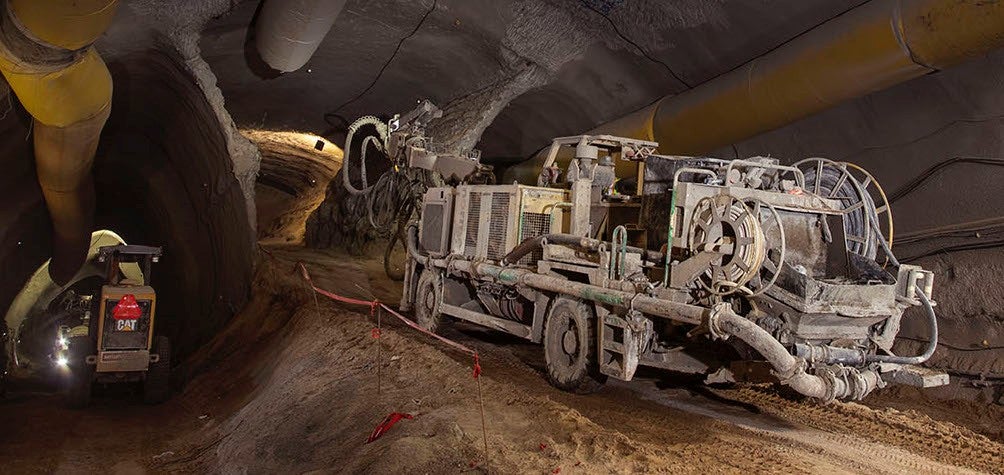
Tunnel excavation at the Bondi STP. The main scope of the construction involves excavating a cavern to provide additional space, work within the plant itself and the refurbishment of the digesters in the above ground section of the facility.

The above ground section of the plant, showing the digesters. The Bondi facility is Sydney's third largest coastal treatment works.

The abseiling team inspecting one of the digesters. Each of the plant's four above-ground digesters needs to be emptied and refurbished in turn.

The fence being installed on Hugh Bamford Reserve – around half of the adjacent ground has been adopted as a construction staging area. Once work finishes, an extensive program of rehabilitation will take place and Sydney Water is also to contribute to various long-term improvements to the site.

The installed fence around the staging area was painted and landscaped with native species to reduce its visual impact.

Installing the renovated penstocks; these gates are thought to have been made in England during the early 1950s and shipped to Australia. They are one of several local significant heritage items.

In January 2006, the demountable buildings were removed from Blair Street North Bondi and a new staff car parking area constructed.

One of the ocean outfall pump valves. Removing, refurbishing and reinstalling each of these in turn was one of the most challenging aspects of the project.


A series of impressions of the new plant; finished facility model (centre); artist's impression of the new public open space areas (top left); example of onsite building design (top right); artist's impression of the new wetland habitats (bottom left); the planned education building (bottom right).

Schematic of the new conveyance system which, together with a new marine outfall and the plant itself, completes the project's programme of works.

Project schematic. Wastewater treatment capacity has been identified as one of the key factors in the region's future economic development.

Map of King County service area. The population of the Puget Sound region has more than doubled since 1960.

Annotated composite aerial view of the plant. Construction work on the 114-acre site, which began in November 2005, continues on schedule for its planned entry into service in 2010/11.

Main picture, a typical section through the new outfall; a tug pulls outfall sections into place (top left); a section of the diffuser (top right); near-shore trench sheeting (bottom left); graphic of barge-mounted cranes lowering outfall segment (bottom right).

The outfall will originate at Point Wells (Portal 19) and extend offshore for approximately 5,200ft. The diffuser section will be 500ft long and will installed at a depth of 600ft.

Canal Road Waste Water Treatment Plant
Aerial view of the Canal Road Waste Water Treatment Plant.

The plant's new photovoltaic system comprises over 2,800 panels.

The filter building at the plant. In addition, there are two pumping stations, a main control room, site laboratory and offices.

Satellite view of Hurricane Floyd on the night of 15 September 1999. The following night its flood waters struck the Canal Road plant, causing considerable damage.

Control equipment for the newly installed PV system.

A typical, large, ground mounted array. The design encourages air flow beneath the panels, leading to cooler operating temperatures and enhanced electrical generation.

A single ASE 300 W Module from RWE Schott. The plant's new installation is one of the largest in the US and is expected to provide 15% of its peak energy requirement.


Plan of the new facility. 2 Airvac Pumping Station 3 Head Works 4 Aeration Basins 5 MBR 6 UV Disinfection 7 Standpipe storage (treated water) 8 Effluent pipeline 11 Operations Building/lab 12 Odour control 13 Backup generator 14 Solids handling 15 St

Susanna M Leung of Carollo Engineers accepts the WateReuse Small Project of the Year Award on behalf of the Carnation Wastewater Treatment Facility.

One of Zenon’s ZeeWeed MBR modules: this technology was principally chosen for the new plant as a result of its high-quality effluent and proven operational reliability.

The plant opened – with a ribbon-cutting ceremony and a blessing from the Snoqualmie Tribe – in June 2008.

Conceptual wetland discharge design: the treated water will eventually be discharged to the Chinook Bend wetlands along the Snoqualmie River to enhance the local hydrology and water quality.

In 2006, Bill Paulsen, Carnation’s Mayor, and Ron Sims, the King County executive, joined members of the local community for the formal groundbreaking of this small but regionally significant $23m plant.


The new plant brings Chennai’s total water treatment capacity to 1.28 million cubic meters per day.

The port of Chennai; the city is the capital of Tamil Nadu state, India's fourth biggest city and the country’s third largest commercial / industrial centre.

One of the plant's thickeners. The plant was designed to provide a highly efficient treatment, with minimal water losses and optimal land usage.

Tamil Nadu's Chief Minister, Dr. Kalaignar M Karunanidhi (centre) and other dignitaries at the new plant's formal inauguration on 19 July 2007.

The new plant under construction. It is designed to meet the needs of around four million people out of the city’s estimated population of seven million.

The new plant is one of a number or initiatives over recent years to ease the city's chronic water shortage.

The streets of Chennai. Water drawn from the Chembarambakkam Lake forms the raw water feed for the new plant, but the essential irrigation supply is not affected.

The new plant under construction; the facility was designed and built in 24 months.


Chongqing City from the Yangtze River.

The heavily industrialised city of Chongqing.

Markers show the intended reservoir water levels - an interim 135m (June 2003) and the final 175m (by 2009).

Construction begins on the wastewater treatment plant in Wushan (May 2003). A total of 170 WWTPs are scheduled to be built under the combined initiatives.

The Three Gorges Dam – the world’s largest hydro-electric project – and the Yangtze River seen from the Proba satellite.

Construction work progressing on the banks of theYangtze; the complete wastewater project is not expected to be finished before 2010.


Construction at the dam; work was finally completed in May 2006, ahead of schedule and on budget.

Wu river – a Yangtze tributary; the water quality in many tributaries has deteriorated so greatly that they are now officially rated as unfit for any economic purpose, including irrigation.

More construction work along the banks of the Yangtze. The Chongqing urban environment project has other components in the adjacent urban centres of Wanxian and Fuling, together with pilot schemes in Qianjiang,


Composite aerial view of phase 1. This stage of the project principally involves work on the chemical facility, together with the construction of a new odour control biofilter and a toxic gas scrubber.

The existing plant has served the City of Redding in its present form since 1979. The current project is the second rehabilitation of the works and will provide a modern wastewater treatment facility designed to meet the city’s needs up to 2025.

The ferric chloride tank during construction – part of the opening stages of phase 1, which is scheduled for completion in October 2007.

Simplified map showing the location and service area of the plant.

The new eight-inch water pipe being installed. Phase 2 will also see the installation of a tie-in to the city’s potable water supply and a new outfall is scheduled for construction as part of phase 4.

The chemical resistant coating applied to the ferric chloride foundation within the new chemical facility.

Map
Due to bedrock underlying soils, there is a problem of surface runoff in Cordova. The city's collection system is often infiltrated with seawater, because it is placed in a set of tidal flats called Orca Inlet.
The Cordova wastewater treatment plant is located in Cordova, Alaska, on the eastern shore of Prince
The Cordova wastewater treatment plant is located in Cordova, Alaska, on the eastern shore of Prince William Sound.


New York's Croton water system is the oldest to supply the city and today accounts for around 10% of the drinking supply.

A stream in the Croton Watershed; stormwater run-off makes the likelihood of contamination high and there have been a number of pollution incidents historically.

Image of the waterborne parasite Giardia from a scanning electron microscope; changes to Federal law regarding water quality and public health have driven the construction of the new Croton water filtration plant.

New York and the Hudson River from space. New York receives water from two geographically discrete sources – the Catskill / Delaware watershed, to the west of the Hudson river and the Croton to the east.

New Croton Reservoir – one of 12 reservoirs and three controlled lakes in the watershed, responsible for supplying around one million New Yorkers – mostly in the Bronx and parts of Manhattan.

The parks of New York; the location of Van Cortlandt Park, underneath which the new filtration plant is to be built, is shown at '2'.

Detroit's wastewater collection system and main treatment plant serve more than three million people
Detroit's wastewater collection system and main treatment plant serve more than three million people in 78 communities.

Aerial photograph showing Detroit and Detroit River. Many of the developments at the plant over the years have been designed to safeguard this waterway.

Construction of the Detroit wastewater treatment plant.

All of the 25 existing secondary clarifiers will be improved as part of the ongoing programme, principally by the replacement of a number of their key components and ancillary equipment.

In addition to the major infrastructure elements of the project, a scheme is underway to compile and update the plant's "as-built" drawings and to create them where none currently exist. A network database is also being developed to store them.

The second phase of the plant's extensive instrumentation and computer upgrade is underway, covering equipment used for data acquisition and control of the DWSD systems. In addition, new control rooms are being built for the oxygen plants and sludge dewatering complex.

The current phase of the project includes a major programme of works on the primary treatment facilities including replacing the troughs and weirs at the rectangular clarifiers.


Lafayette reservoir; the associated WTP is due to be expanded – along with EBMUD’s five others – to meet future water demand.

The project is set to meet forecasted demand increases.

The entrance to Orinda WTP; this plant is the largest of the six, with a daily capacity of 755,000 cubic meters.

The entrance to Lafayette WTP; one of the options considered – and rejected – would have seen this plant decommissioned.


Magnetic flow meters monitor the influent which arrives at the site's three large force-mains from a number of locations across the county.

The plant has four peripheral feed / peripheral take-off secondary clarifiers which return excess RAS to the bioreactor.

Two egg-shaped, 3,800m³ anaerobic digesters treat the sludge. The biogas produced heats the digesters themselves and also fires the regenerative thermal oxidizers.

Surplus sludge is thickened by centrifuge before being digested; final disposal is to landfill.

The plant's preliminary odour treatment, part of the $13 million odour control package of packed-tower wet scrubber systems and biogas-fuelled regenerative thermal oxidizers.

Phase II used 3D design software to provide the 3,000 drawings required, ultimately winning the 2005 Bentley Empowered Award for Plant 3D Modelling.

Fine bubble diffusers in one of the plant's four activated sludge bioreactors. Adjusting the relative aeration within the vessel aids denitrification and optimises process control.

The ZeeWeed on-site pilot plant where the membrane trials took place. The Phase II tertiary treatment system will treat 152,000m³ of effluent per day.

On-site tanks. All plant structures have been deliberately planned to minimize their visibility from both local homes and highways; the facility itself is located in the middle of a wooded, 700-acre site.

Band screens at the plant. The plant is designed on the multiple barrier principle, using a variety of processes to remove the same pollutants, and has a high provision of back-up / stand-by equipment.


Formwork holds the clarifier tanks in place before concrete is placed over the rebar at the Fallujah WTP.

Only around 6% of Iraq's 27.5 million population are served by WTPs.

Iraqi workers placing concrete for the clarifier tank at the WTP.

The project will provide up to 700 jobs.

The WTP project forms part of Iraq's extensive reconstruction programme.

The scheme will provide Fallujah with its first-ever wastewater treatment plant and collection system.


Some of the 450 Iraqis currently working on the project.

Aerial shot of the plant

The plant from the air.


Satellite image of the Gippsland Lakes: The project will help to protect the region’s waterways and resources.

Diagram of the Memcor CMF-S system. Micro-filtration provides water of a consistently high quality.

The Gippsland Water Factory's 12 cells, each containing 216 membrane modules.

Membrane filtration combines with activated sludge treatment to meet required water re-use standards.

The system will be able to treat 35 million litres daily.


The Bearspaw pre-treatment facility. Aerial view during construction (left) and ground view near completion (right).

Work underway on the Glenmore sodium hypochlorite facility. It is expected to be commissioned in 2008.

Construction work at the Bearspaw pre-treatment facility, designed to overcome turbidity problems.

Preatreatment facility construction. The VC-10 pipe installation, May 2006 (left) and the building itself during construction.

Work in progress on the new building; inside (left) and the south-east elevation in May 2006 (right).

Glenmore WTP sodium hypochlorite facility (left) and the Bearspaw pre-treatment facility (right). The upgraded plants will meet regulatory and supply needs until 2025 and beyond.

Aerial views of the work in progress (March 2007)


Grants have been made to 11,000 households not connected to the main sewer system to install septic tanks.

Installation of the Halong City section of the Three Cities project took 20 months.

The system should stop the transmission of waterborne disease.

The activated sludge system for treatment of waste.

The project involved the installation of over 80km of new sewer pipes.


Looking across the secondary cell towards the primary. The secondary cell, is entirely aerobic to aid BOD reduction, residual solids removal and nitrification.

Schematic of the aeration process. The aerators / processors are wind-powered, contributing to a significant reduction energy costs.

A Mark 3 aerator / processor unit out of the water. At Holkham there are two, each equipped with a backup motor.

Holkham is one of the major tourist destinations on the North Norfolk coast and bathing water quality is monitored at the nearby Wells beach.

The Aero-Fac facility at LaPine, Oregon. The aerated facultative system was first developed during the 1970s in the United States.

A recent delegation from Severn Trent with John Gillett (centre), MD of LAS International (Europe).

One of the winches used to position the aerator / processors.

Plan layout of the Holkham cells.

The Hyperion wastewater treatment plant.

A view of the site during the secondary treatment expansion of the Hyperion WWTP.

The plant's co-generation system. Rational energy usage has been a central part of the plant's operating policy from the start and energy recovery is an important aspect of this approach.

Schematic diagram of the plant's primary treatment regime.

Schematic diagram of the secondary treatment regime.

An aerial view of the Hyperion plant as it is today.

The plant's aeration basins and clarifiers. Retrofitting the basins with a more efficient air diffusion system has significantly increased the secondary treatment capacity.


Solids processing odour reduction stations at the new Tijuana water treatment plant.

Water tanks at the Tijuana plant.

Influent pumps.

The wastewater treatment plant in Boone, North Carolina.
Formerly known as the Town of Boone facility, the Jimmy Smith Wastewater Treatment Plant won the 1999 Engineering Excellence Grand Award from the American Council of Engineering Companies of North Carolina.

An aerial view of the plant. The wastewater treatment regime at the plant involves oxidation ditches, circular clarifiers, deep-bed tertiary sand filtration and ultra-violet disinfection.

Sludge scraping on the 28m clarifiers. The plant has two of these, which receive the effluent from the new oxidation ditches.

Boone's sludge disposal has been revolutionized. A combination of dewatering by polymer and belt press methods, together with the new Atlas Stord Class A thermal drier (the first such municipal unit in the state) yields a 90% dry biosolid ideal for fertilizer use.

The belt press after installation; the sludge stream passes through the belt press at 16% solids.

Finished biosolids storage; over half of the material produced has been distributed to the public. Class A sludge is approved for land use 3m to 9m away from a stream.

Cascade aeration; the treated effluent is discharged into the South Fork of New River. The plant upgrade was driven by increased environmental standards when this waterway was designated an Outstanding Resource.

Although the plant has a capacity of 18,250m³/day, it is currently running at approximately half capacity. A 2003 Watauga County report concluded that the Boone system offered the greatest potential for water and sewer partnerships.

The Kyabram water improvement project in Victoria, Australia, is part of a major capital works progr
Map of Victoria and south east Australia. Shepparton lies to the north, in a region where the predominant industries are fruit, vegetable, beef and dairy processing. These particular demands have had a significant influence on the improvement scheme.
Water Treatment Process Diagram.
Australian streams and rivers are very sensitive to environmental impacts; new guidelines recommend avoiding discharges to waterways wherever possible, driving a programme of upgrades at wastewater treatment plants.

Location map of the Goulburn Valley Water catchment area, highlighting the western zone of GBW's Central District, where these works took place.

Work started on the Shepparton High Rate Anaerobic Lagoon (HRAL) in November 2002.

Aerial photograph of the HRAL in construction. The construction of this 200,000m³ lagoon, with its 5ha footprint, is the largest project ever undertaken by GVW and attracted funding from the Australian Government and local industry.

Once completed, the HRAL will allow the effluents from local food processing industries to be treated in an affordable and environmentally sustainable way. The water reclaimed will be used to irrigate 230ha of pasture during the summer.


USFilter's microfiltration plant.

Front of microfiltration units.

Looking toward the backwash tanks at the Lake Erie plant.

Back of the microfiltration plant.

The £19 million Sludge Treatment Centre (STC), located on the docks at Millbrook, Southampton,
The £20 million Sludge Treatment Centre (STC) is an integral part of Southern Water's strategy to deliver even cleaner seas to the Sussex coast.

Wastewater treatment at Millbrook consists of largely traditional elements; the sludge digesters form the background, with final settlement tanks to the fore.

Aeration lanes provide biological treatment at the plant.

One of the six primary tanks, which between them remove around 65% of the influent solids.