
Water Supply

Adam Clark Water Treatment Plant
Adam Clark Water Treatment Plant.
water treatment plant
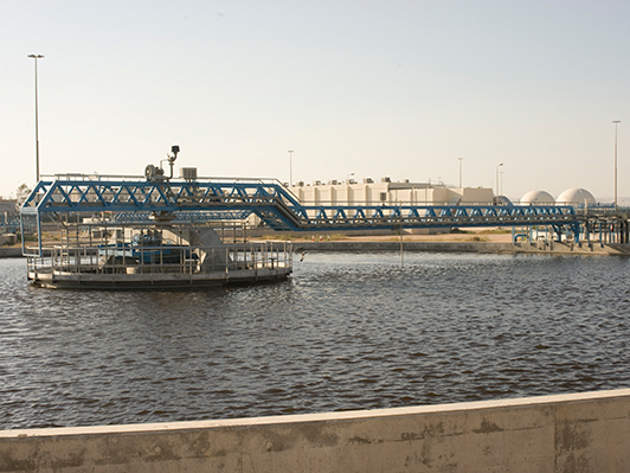
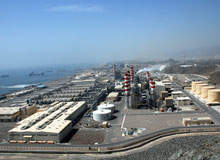
The 165,000m3/day water treatment plant at Weija.
water treatment plant
Ballast Nedam signed a contract for the rehabilitation and expansion of the Adam Clark Water Treatment Plant.
Construction
Adam Clark Water Treatment Plant started construction in 1999 and it opened in October 2001.
Pipeline
The contract required the improvement of raw water transmission and an upgrade of the raw water pumping stations.
Pipeline
The construction of a new 1.5km raw water pipeline (diameter 11-14cm) between the pumping station and the treatment plants.

The desalination plant at Bahrain was part of the Bahraini Governmnet's $360 million project, which
The desalination plant at Bahrain was part of the Bahraini Governmnet's $360 million project, which involves the construction of a power and desalination facility on the Muharraq Island.


San Diego's oldest existing water treatment plant, Alvarado, has received a National Historic Award from the American Water Works Association for its contributions to water supply and technological development.

Phase II ended with the formal ribbon cutting to unveil the new basins. San Diego Mayor, Jerry Sanders, and Council member Jim Madaffer joined the City of San Diego Water Department staff at the ceremony.

Aerial view of Lake Murray; completed as part of Phase II, the new flocculation and sedimentation basins were built along the south-eastern shore.

DYK completing the vertical pre-stressing and the exterior finish of the new Earl Thomas Reservoir. The location called for good seismic stability and several features have been incorporated into the design to mitigate the potential effects of tremors.

Aerial view of the site during Phase 1A of the work. The programme of renovation and construction began in 1993 and will be completed in 2010 or later, depending on bond financing and State grants.

The new Earl Thomas reservoir was dedicated in December 2005. The San Diego Mayor, councillors, community members, contractors and city staff attended the event, which also unveiled the new parking lot for Lake Murray visitors.

Aerial view during Phase 1 construction; the Lake Murray raw water pump station underwent a complete re-build.


Located on Israel's southern Mediterranean coast, the new Ashkelon SWRO plant will provide around 15% of Israel's domestic needs. It is the first of a number of similar large-scale seawater desalination facilities planned.

Design drawing of the new Ashkelon plant. Producing 100 million m³/yr of desalinated water, it is the largest facility of its kind in the world.

The plant holds 40,000 membrane elements in 32 reverse osmosis (RO) treatment trains over four floors and uses optimised, multi-stage RO and boron removal procedures.

Simplified diagram of the process. Operational reliability and continuity have been heavily prioritised throughout the design.

Artist's impression of the finished plant in situ. It occupies an area of 75,000m² and includes its own gas turbine power station to provide the facility with a dedicated electrical supply.

Israel has a chronic water resource problem - North Africa and the Middle East is the world's most water-scarce region. Israel's Desalination Master Plan - a major initiative to double desalinated water production to 400 million m³/yr - arose in response.

Producing more than 100 million m³ of water/year, the Ashkelon SWRO plant is twice the size of the current next largest facility of its kind.

The plant uses a three-centre design to maximise efficiency, reliability and operational flexibility; the comprehensive mathematical modelling performed on the entire system during the design stage enabled commissioning to be fast and straightforward.

A dedicated gas turbine power station was built adjacent to the desalination plant; an overhead line provides a second supply from the Israeli national grid.

The facility comprises two identical plants, each consisting of a pumping centre which feeds 16 RO banks. The complete installation holds 40,000 membrane elements and uses optimised, multi-stage RO and boron removal procedures.

Ashkelon produces around 13% of Israel's domestic consumer demand – at one of the world's lowest ever prices for desalinated water. It has been suggested that it could be many years before this plant's achievement is matched.

Computer Simulation of the Sunrise Cogeneration and Power Plant, Looking North.
With groundwater quantity and quality declining, Cal Water turned to the Kern River as an alternative source.
The plant is being built near a town called Bakersfield in California (USA). The site is near the in
The Bakersfield plant is a state-of-the art facility, combining micro-filtration with other technologies.
Photosimulation of Sunrise-Valley Acres Transmission Line (ground view looking northwest).
Early construction work included excavation for an extensive network of buried piping for pre-treated water, finished water, backwash collection, residual decant recovery and storm water drainage.

Backwash recovery is an integral part of the high efficiency water conservation strategy at the plant. Less than 1% of the raw water drawn is lost.

Photomicrographs of the Pall Aria hollow fibres, showing the polyacrylonitrile (PAN) fibres for ultra-filtration (left) and polyvinylideneflouride (PVDF) for micro-filtration (right).

The 726 vertical membrane modules installed make the Bakersfield plant one of the largest micro-filtration facilities on the West Coast of America. This technology is effective against Cryptosporidium and Giardia.

In March 1998, a PURAC Group consortium was awarded a £40 million contract by Oslo City Council to u
In March 1998, a PURAC Group consortium was awarded a £40 million contract by Oslo City Council to upgrade the existing sewage treatment plant for Oslo, Norway. The new Bekkelaget plant will serve a population of 250,000 and has a design capacity of 250 Mld.
The process is designed to meet the twin challenges of creating flexibility from a compact plant. Tr
The process is designed to meet the twin challenges of creating flexibility from a compact plant. Treatment begins with adding chemicals before primary clarification, followed by an activated sludge process including nitrification and biological pre-denitrification.


The plant draws its raw water from the B. Everett Jordan Reservoir - more commonly known as Jordan Lake - which lies 10 miles to the west of the town of Cary in the Cape Fear River Basin.

The principal aim of the expansion programme was to increase the plant's original daily treatment capacity from 60,000m³ to the current 150,000m³/d.

Phase 1 of the project increased the original treatment capacity by an initial 30,000m³/d.

Treatment at the Cary / Apex WTP plant makes use of Super-Pulsator Flocculator Clarification technology.

Schematic of the Super-Pulsator Flocculator Clarifiers used at the plant.

Super-Pulsator Flocculator Clarifiers in operation.

Chart showing the share of water consumption in terms of the plant's defined customer group categories.

A comprehensive education programme supports the long-term water conservation plan to cut water consumption by 20% by 2015.


The filtration units have sophisticated instrumentation. The picture shows an Aquatrend display unit.

Backwash and raw water feed pumps at the Cholla water treatment facility.

Ultra filtration (UF) pilot module online at 7gpm.

Carbon slurry tank and feeder.

Re-circulation pump for cross flow mode.

Ultra filtration (UF) Panelmate and PLC controls.


Cut-away computer image of the Columbia Heights ultra-filtration (UF) facility. When completed, it will be the largest such installation for potable water in North America and one of the largest in the world.

Computer simulation of the UF system in situ. The technology is to be supplied by Norit, with Ionics responsible for the complete membrane system.

Interior design of the Columbia Heights Filtration Plant by Black & Veatch.

A low-pressure, UF cartridge system, capable of purifying 265,000m³ daily, will be arranged horizontally within the new treatment building, as shown here.

The project requires Ionics UF technology, seen here, to be integrated into the existing plant, along with lime softening, coagulant and floc sedimentation, to replace the existing granular media.

Even before completion, the innovative implementation of membrane systems used in the plant's design has already won a Project Merit Award.


The Corkscrew WTP won the Department of Environmental Protection's Award for Excellence in 1982 along with numerous safety awards over the years. The expansion will increase capacity from 38,000m³/day to 57,000m³/day.

Project preliminaries included an extensive programme of surveying and geo-technical investigations.

Site preparation began in late 2003 and completion is expected for March 2005.

In addition to a new carbonisation basin, a 16.5m-diameter lime softening contact tank, chemical storage silo and four new Leopold filter units will also be constructed.

Lee County has seen rapid population growth since 1950, which is predicted to continue for at least ten years. The Corkscrew expansion, together with the allied Green Meadows project, form part of the response to this.

The expansion retains the same main treatment processes as the existing plant.

The project demands extensive pipe-work, including a major interconnection between the Corkscrew and Green Meadows WTPs and a new feed into the existing transmission mains.

Careful timeline management ensures that components are pre-delivered to the site, minimising the risk of installation delays.


Inside the plant: the new plant uses three-stage dissolved air flotation (DAF).

The aerial photograph of the plant during construction shows its proximity to a largely residential area: both the design and construction were deliberately planned to minimise local disruption.

The plaque unveiled at the plant’s official opening in May 2008.

Construction work underway in August 2006.

Looking over the site in September 2006.

Inside the plant as it takes shape in January 2007.


Artist's impression of the finished plant. The city of Edmonton lies some 11 miles downstream; with a population predicted to exceed 1 million by 2009, upgrading the facility is intended to provide a 25% increase in the area’s available drinking water.

Alberta's North Saskatchewan River Basin covers 28,000km2 upstream of Edmonton and is a unique area of outstanding natural beauty.

New river intake diagram. The structure itself lies on the river bed, 3m below the surface. Given its low suction velocity, most fish have no difficulty in avoiding it; a novel mechanism gently returns small ones that slip through the screen downstream of the intake.

Location map of EPCOR facilities in the region. The two WTPs in Edmonton – Rossdale and E L Smith – have a current total capacity of 530 million litres per day.

The source of the North Saskatchewan River – from which Edmonton draws its drinking water – is the Saskatchewan Glacier in the Columbia Icefields, the only glacier in the world to drain into three oceans.

Cross section showing the transmission route. Nearly 600m of transmission tunnel is being constructed 10m below the North Saskatchewan River to serve the rapidly expanding population to the south and south east; one of the access shafts is over 60m deep.

Map of the North Saskatchewan watershed.


The new RO facility is designed for easy future expansion. When phase II doubles the plant's capacity in 2010, no major construction work will be required.

The plant uses Reverse Osmosis (RO) membranes to desalinate brackish groundwater to potable quality.

Figure highlighting the growth in demand over recent years; current estimates indicate that James City Service Authority will require an additional 5.5-million m³/year to meet predicted needs to 2040.

Four RO modules have been installed; phase I utilises two of them and the remaining pair will be connected and brought on-line in phase II.

Five on-site wells draw brackish water from the Middle and Lower Potomac aquifers, which is subsequently pumped to the RO trains under high pressure.

Each of the RO modules can produce 3,800m³/day of potable water each, which represents around 80% of the input.

The Bibb Water Treatment Plant project was a response to massive flooding of the township of Macon a
An image of Tropical Storm Alberto captured on Doppler radar. In 1994, it caused heavy damage to the existing Riverside water treatment plant at Macon, in Bibb County southern Georgia. The new Frank Amerson plant was built in response.
The Town Creek Water Treatment Plant and associated facilities cost $125 million to design and build
A total of 78 counties were declared Federal disaster areas - 55 in Georgia, ten in Alabama and 13 in Florida. Across the entire area of the three states affected by the flooding, 17 new record flood levels were recorded, some breaking the old records by over 2m.

Some of the worst flooding occurred along Georgia's Ocmulgee River and its tributaries; Macon was one of the hardest hit cities.

Water drawn from the Ocmulgee River is pumped to Javors J. Lucas Lake - the Town Creek Reservoir - to feed the adjacent Amerson WTP.

A high-capacity pump withdraws raw water from the reservoir lake. The plant has a current demand for 230,000m³ daily.

The finished water is stored in a number of domed clearwells on the 1,200ha site.

The view looking from one of the clearwells towards the water production building, which also houses the plant's state-of-the-art water quality laboratory.


Map of Libya; the GMR project draws water from aquifers beneath the Sahara and conveys it along a network of huge underground pipes to the coastal belt.
Operations centre
Excavation work in the desert. Phase 1 of the project alone required 85 million m³ of excavation before a quarter of a million sections of concrete pipe, spanning some 1,200km could be laid.
GMR diagram
Schematic map of the project. Designed in five phases, which eventually combine to form an integrated system, it is an estimated 25 years from completion.

Computer simulation of a Phase III control room. The project's communication and control systems make extensive use of microwave radio and extranet technology to co-ordinate operations.

The Libyan Desert, not far from Ajdabiya, on the Phase I route. Little is visible above ground to suggest the scale of the pipeline passing beneath the sand to supply Benghazi and Sirt.

Colonel Moammar Gaddafi at the formal inauguration of Phase I of the project, in August 1991. The Libyan leader has played a major role throughout the project, taking a close interest in its progress and describing it as the "eighth wonder of the world".

Lahmeyer International with worldwide experience partnered Sigma Consulting Engineers in supervising
The King Abdullah Canal. A $70 million project increased the amount of water pumped to Amman along this the canal to 90 million m³/year.

Jordan's position in the Middle East. The Kingdom is one of the most water-scarce countries in the world and its annual per capita water allowance lags significantly behind other countries in the region, especially its near neighbours Israel, Syria and Egypt.

Multi-donor collaboration has funded a number of projects throughout Jordan, including new treatment plants and major repairs to the existing facilities and infrastructure.

Sterilization ponds at As-Samra. The country's annual water demand currently exceeds 1 billion m³ and is projected to rise to over 1.3 billion m³ by 2005.

Amman has particular water supply problems. A third of the Kingdom's total inhabitants live within the Greater Amman area.

A public awareness walk at Amman's Water Use Conservation Festival. A long-term programme of such events has made a significant contribution to reducing water wastage in the city.

Diagram of land usage in Jordan. The country's total area is 92,300km², of which all but 329km² is dry land; only some 750km² is irrigated.

The route of the proposed Red Sea-Dead Sea canal. The planned 180km conduit, consisting of tunnel and canal sections, would carry1.8 billion m³/year of seawater to associated power / RO desalination projects and provide 850 million m³/year of fresh water to Jordan, Israel and Palestine.


Yuvacik Dam.

The Paterson Candy-designed water treatment plant.


The Kamloops plant is the largest operating facility in North America to use membrane treatment, with a treatment capacity of 160,000m³/day and the installed hydraulic capacity to expand to 200,000m³/day.

One of the membrane cassettes. Each cassette comprises 64 elements, each one containing 2,646 individual membrane fibres, with a nominal pore size of 0.04 microns.

The plant under construction. Work began in March 2003 and was completed by the end of December 2004.

One of the membrane tanks during construction.

The membrane system comprises a two-stage ultra-filtration (UF) process; the primary filtration stage consisting of 12 parallel trains, with six membrane cassettes per train.

The water treatment plant nearing the end of construction.

One of the membrane tanks being aerated. Membrane cleaning takes place by a combination of tank aeration at ten-second intervals and a 30-second back-wash occurring every 15 minutes.

The plant also hosts an educational facility - the first of its kind at an operational water treatment plant in North America - providing an important venue for water quality research and training.


The city of Kampala; the Gaba III plant has been designed to help meet the needs of the Greater Kampala area to 2015.

The new Gaba III plant, which increases the overall capacity by 80,000m³/day, bringing the total daily output up to 200,000m³ and meeting Greater Kampala’s needs to the year 2015.

A young girl at the clear water well at the Mercy Home for Children, Kampala. Since 2005, NWSC have made great advances in supplying the underprivileged areas of Kampala, now serving about 85% of the urban poor, who previously had to rely on untreated water from contaminated wells.

Ugandan President Yoweri Museveni formally commissioned the new Gaba III plant in April 2007. In his speech, he reaffirmed his commitment to providing safe water to the population and eradicating poverty throughout the country.

Satellite image of Lake Victoria; the raw water for the Gaba plants is drawn from Lake Victoria’s Murchison Bay. Water quality has been adversely affected by pollution and drought.

Work to refurbish the original Gaba plant took place in 2003 with EU funding.

Women line up at a new bore hole at Labuje, Uganda. The Ugandan government is committed to the provision of sustainable water resources for the future – and universal access to a safe supply by 2015.


Reservoirs with new water treatment works in background.

The Balmore pump house underwent significant modification during the project.

The new clearwater tank – the first compartment of the service reservoir was tested in September 2005.

The new clearwater pumping station.

Bankell service reservoir with the other reservoirs in the background.

The new water treatment works and clearwater tank with reservoirs in the background.

Aerial photo taken in July 2007 as the new plant takes shape.

Installing the pressure reducing valve on the M5 main.

Work to complete the M5 valve chamber will continue during September 2007.

The new plant will provide Glasgow with a state-of-the-art supply.


Each of the plant's RO trains comprises 120 pressure vessels, arranged in 12 rows, which contain eight SWRO membranes apiece.

Construction of the desalination plant began in 1999.

The seawater pumping station under construction.

The water plant at Larnaca was protected with epoxy coated reinforcement.

Large pipes were imported to filter the water. The output capacity was upgraded to 54,000m³/day.

The desalination plant uses reverse osmosis membranes.

Built near Larnaca airport, this is the largest desalination facility in Cyprus. The plant has six treatment trains, five for seawater RO and the sixth as secondary permeate treatment.


The new WTP is the single largest public works project undertaken by the City of Longmont to date.

South-west view of the site.

Construction work on the new water treatment plant began in August 2003.

View inside the new main building. The design of the treatment plant itself is conventional, using flocculation / sedimentation, dual medium filtration and chemical disinfection.

The plant uses two-stage rapid mixing, three-stage flocculation and high-rate lamella plate settlers for pre-treatment.

One of the new pumping station installations.

A new 114,000m³ raw water reservoir was constructed as part of the project to mix the inflow from the city's various water sources to provide consumers with a consistent taste.

View over the residual ponds; the new WTP site extends to over 120 acres.

Malawi District Water Supply III Project
Current sources of supply for the Malawi water system are from mountain streams, lakes and rivers. As a result, there are existing problems with siltation and turbidity associated with the fine sandy deposits within the water sources.

A landlocked country in southern Africa, Malawi has a long history of water borne infections. Over 20% of its total area is covered by fresh water.

The water supply project is a country-wide scheme, involving all of Malawi's regional water boards. The Central region has one centre; the Southern and Northern regions each have six.

A tributary of Malawi's Bua river. The use of natural waterways for a wide range of purposes can often contribute to poor public health.

Malawian public toilets. The project includes a drive to improve sanitation on a local basis, since the use of unprotected pit latrines is widespread.

Pyramid chart of land usage in Malawi. In a country of 94,080km² of land, only around 300km² is irrigated.

Comparison of rural and urban populations in 1964 and today. The DWS III project is part of Malawi's national water services development master plan, drawn up to meet the needs of a growing population and increasing urbanisation.

Map showing the location of Mansoura (Ad Daqahliyah) in Egypt.
Camp, Dresser & McKee architect Nick Safina's CAD-generated image of the new plant.
Graph showing the water supply of Egypt in comparison to the rest of Africa.
Diagram showing the water treatment plant's treatment process.


Aerial view of the Miramar plant. A fast-growing population coupled with changes in regulation and the age of the facility – it first entered service in 1962 – made the current upgrade and expansion essential to meet the city’s future water supply needs.

Map of the lakes and reservoirs of the San Diego area. Lake Miramar is one of nine reservoirs managed by the city’s Operations Division and the WTP one of three responsible for supplying 1.3 million local inhabitants.

Computer-generated perspective of the San Diego area viewed from the south, showing the influence of topography on growth.

The Early Start Improvements – a two-phase programme of work spanning 1998-2004 – began the project, principally comprising major improvements to the distribution system.

The Miramar project elements and schedule superimposed on the existing plant. Four further contracts will take the project through to its anticipated completion towards the end of 2010. The work will increase the plant’s daily treatment capacity to 815,000m³/day and provide a state-of-the-art facility with a 75 year design lifespan.

San Diego from the waterfront. With a current population of more than 1.3 million and predicted to approach 2 million by 2030, since July 1998, the city has been implementing a major capital improvements programme to meet the future needs of its inhabitants. The Miramar project forms part of this scheme.


A Degrémont membrane array similar to those for use in the new seawater reverse osmosis (SWRO) plant which, when completed, will be the largest of its kind in the southern hemisphere.

The plant will draw feed water from the Cockburn Sound and subsequently return the concentrate stream. These waters are environmentally sensitive and strict safeguards have been put in place to protect any damage to the habitat.

Kwinana, where the new desalination plant is being built, is Western Australia's centre of heavy industry and lies some 25km to the south of Perth; the area is already home to a major new water reclamation facility.