
| Acheloos | ||
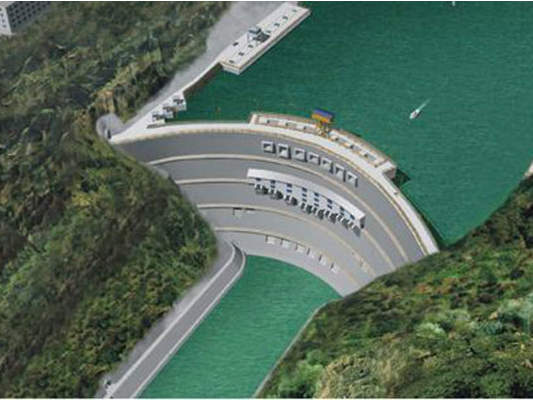
The scheme involves the construction of a major diversion channel, two tunnels, a water intake system, sluice gates and surge shafts |
The Acheloos River rises in the Pindos Mountains in the centre of Greece and flows westwards to the Ionian Sea. The southern end of the mountain range separates it from the Thessaly plain. |
The Acheloos delta forms the Messolongi lagoon complex, which is listed as a Ramsar site. If the diversion is completed, it will suffer a critical reduction in freshwater input and its character will be drastically changed. |
The wetland habitat is included in the national NATURA 2000 list and is of great importance to many indigenous species. It is a particularly valuable breeding ground for a variety of amphibia. |
This system of dams, reservoirs and tunnels is designed ultimately to take an estimated 600 million m³ of water from the Acheloos rivers to the other side of the Pindos mountains. |
Much of the southern Pindos and its neighbouring habitats are widely accepted as being of exceptional ecological significance. |
Satellite composite showing the course of the River Acheloos. The scheme aims to divert the river eastwards to irrigate farm land in Thessaly. |
Cotton ready for picking; it is a crop with a particularly high water demand. |
Lake Kremasta and surroundings; the project is likely to have far reaching environmental effects on a number of important habitats. |
| Aquifer Storage Transfer and Recovery Demonstration Plant, City of Salisbury | ||
The ASTR system uses six wells: four for injecting water into the aquifer and two for recovering the water. |
The ASTR project risk assessment and water quality manager tastes the recovered water. |
The figure demonstrates how stormwater can be converted into drinking water using the ASTR system. |
| New York City Tunnel No. 3 | ||
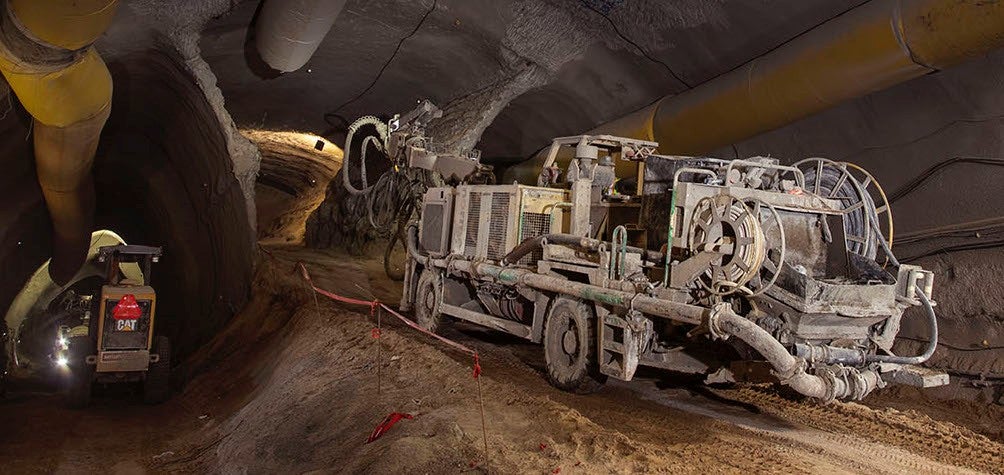
The Van Cortlandt Park Valve Chamber in New York City's Third Water Tunnel, New York. |
Beginning at Hillview Reservoir in Yonkers, Stage 1 of the tunnel extends south through the Bronx, into Manhattan and across Central Park. |
Stage 2 will provide water to the lower west side of Manhattan and sections of Queens, Brooklyn and Staten Island. |
Stage 3 involves the construction of a 16-mile long section of tunnel. It extends from the Van Cortlandt Park Valve Chamber in the Bronx to the Kensico Reservoir in Westchester County. In Stage 4, water will be delivered to the eastern parts of the Bronx and Queens. |
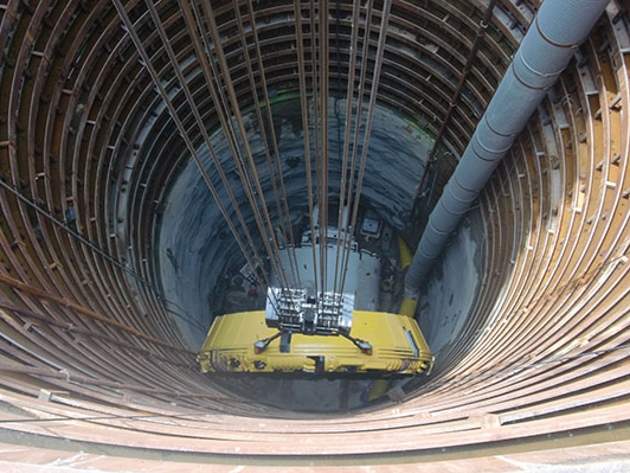
Tunnel boring machine technology should allow tunnel workers to excavate at an average of 50 feet per day at a diameter of 23 feet. |
|
| North Coast Water Transmission and | ||
The north coast of Puerto Rico now has a new water treatment plant and major improvements have been made to the supply of the island's main metropolitan area and industrial hub. |
Map of Puerto Rico, showing Arecibo and San Juan. Finished water is pumped nearly 60km from Arecibo to San Juan, along the project's superaqueduct. |
Puerto Rico's water balance; in 1994 severe drought wrought major disruption to supplies along the north coast. Two million people in the San Juan area were affected. |
Graph showing ground water withdrawal in the San Juan municipality. |
Graph showing surface water usage in the Guaynabo municipality. |
The Dr Antionio Santiago Vazquez water treatment plant in Arecibo has a treatment capacity of 380,000m³/day and supplies 1.6 million people. |
The new water treatment plant employs upflow clarifiers and rapid gravity filters; two 40,000m³ storage tanks hold the treated water prior to transmission. |
The superaqueduct was designed to supply high-quality potable water to a third of the island's population. |
|
| Schoenheide | ||
Sewage diversion Tunnel at Schonheide in the Erzebirge |
||
| Shanxi Wanjiazhai Yellow River | ||
Shanzi Wanjiazhai Yellow River Diversion Project, China, will alleviate water shortages in three of China's industrial areas; Taiyuan, Pingsuo and Datong. |
Map showing the location of the north Shanxi Zhejiant province in China. |
|
| Shuweihat | ||
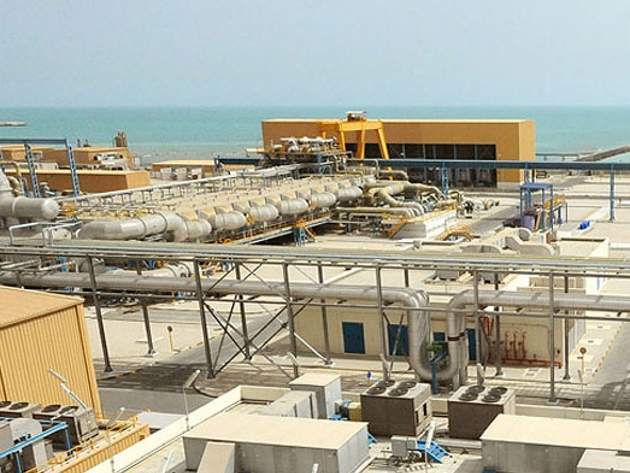
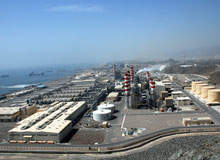
The start of the pipeline at the Shuweihat Desalination plant. |
Producing 1,500MW of electricity and 100 million gallons of desalinated water a day, Shuweihat is the largest independent power and desalination project in the world |
Abu Dhabi Electricity and Water Authority (ADEWA) serves a growing population, investing heavily in a range of independent initiatives to bring water to urban centres in the country’s arid environment |
A section of the twin transmission line during construction. It runs 250km from the Shuweihat desalination plant to Musaffah in Abu Dhabi and has been laid above the natural ground-level for most of the route |
Schematic of the MSF process. It is an efficient, low maintenance approach, ideally suited to the large scale applications of the Middle East |
Map of the transmission scheme |
View of Al Ghail. Despite the enduring oasis images, securing adequate water is a major concern in the region, particularly since water demand had trebled since 1998 |
||
| South-to-North Water Diversion Project | ||
A map of China's South-to-North Water Diversion mega-project. |
The Haihe River and Grand Canal. The project will eventually link the Haihe with the country's three other major rivers – the Yangtze, Yellow and Huaihe. |
Satellite image of the Yangtze River and the Yellow River. Once the project is completed, up to 44.8 billion cubic metres of water will be diverted through three canals to the north. |
The late chairman Mao Zedong on a visit to the Huaihe River Commission Hefei reservoir model in 1954. Work began on the project nearly fifty years after Mao had first proposed the idea. |
The Three Gorges Dam and Reservoir. Declining water reserves in the Danjiangkou Reservoir in Hubei Province have led to the suggestion that this might have to be used as an additional source for the project. |
Beijing skyline; the main aim of the project is to ease the water shortage in northern China, particularly around Beijing. |
Satellite view of a sandstorm over north-eastern China. By preserving groundwater, the water supplied by the project is expected to help reduce sandstorms in this arid part of the country by the later part of this century. |
||